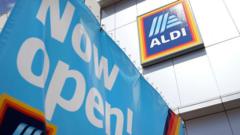
Aldi's Strategic Expansion in the US
Mary Porter, a resident of Manhattan, recently discovered a $4 jar of almond butter at the new Aldi store, a stark contrast to the $22 price tag in her neighborhood. Aldi is known for its budget-friendly pricing, and Porter was pleasantly surprised by the savings she found alongside fresh produce like spinach and organic raspberries.
The new Aldi store is discreetly located in an underground car park beneath The Ellery, a luxury apartment complex in Manhattan. Despite being omitted from the building's online guide, the store hums with activity, attracting a crowd even during the early afternoon hours.
A $9 Billion Expansion Plan
Aldi's discovery by Porter is part of a larger $9 billion expansion strategy in the US, aiming to establish 800 new stores over five years, with a focus on densely populated urban centers like Manhattan. This marks a significant growth for the German supermarket, which has been expanding its presence in the US since 1976, now with nearly 2,800 locations.
This extensive expansion indicates a shift for Aldi, traditionally linked with suburban shopping areas and budget-conscious consumers, as it ventures into urban markets.
Learning from Success in Europe
Aldi's success in the UK market, along with fellow German retailer Lidl, provides a blueprint for its US strategy. By offering high-quality products at lower prices, Aldi gained a significant market share in the UK, becoming the fourth largest grocer with 10.8% of the market. This growth is mirrored across Europe, as consumers increasingly appreciate the quality Aldi offers.
However, despite its growth in the US, Aldi is unlikely to reach Walmart's scale. Currently, Aldi holds 2.9% of the US grocery market, while Walmart dominates with approximately 20%. Analysts suggest that Aldi's smaller size can be an advantage, allowing it to cater to middle- and higher-income shoppers looking for savings.
Appealing to a New Demographic
Data from Placer.ai indicates that Aldi is attracting shoppers with household incomes between $75,000 and $125,000. Persistent inflation has driven wealthier households to seek more affordable shopping options, making Aldi an attractive choice.
Kelvin Dozier, who typically shops at an Aldi in Brooklyn, finds the new Manhattan location more convenient and appealing, enjoying the fresh produce and the store's bright ambiance.
Challenges in Urban Expansion
Despite its appeal, Aldi faces challenges in winning over city dwellers accustomed to premium brands. Ralph Montenegro, a new Aldi customer, appreciates the store's variety and prices but remains loyal to competitors like Trader Joe's due to preferences for organic options.
Aldi's reliance on private-label products helps keep costs low, offering about 80% of what traditional retailers do, but at reduced prices. This efficient model is key to its strategy, though it may limit its ability to challenge Walmart's dominance.
Logistical Hurdles in Manhattan
Expanding in Manhattan presents unique logistical challenges. Aldi's US chief commercial officer, Scott Patton, explained the complexities of supplying the Manhattan store, which requires specialized trucks to navigate the city's streets. These operations, referred to as a "logistical symphony," involve multiple nightly deliveries to ensure shelves remain stocked.
Retail analyst Jerry Sheldon notes that Aldi's approach, while efficient, cannot match Walmart's vast resources and technological investment. Walmart's extensive investments in technology, automation, and supply chain management give it a significant advantage.
For shoppers like Mary Porter, the focus remains on the immediate savings and affordability Aldi provides, offering a welcome relief to her budget.
Source: Original Article