Bison Attack in Yellowstone National Park Injures Grandfather
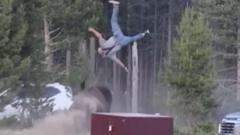
A dramatic incident unfolded in Yellowstone National Park when a bull bison, weighing approximately 2,000 pounds (900 kg), charged at an elderly man, knocking him into the air. The event, captured on video, took place in Wyoming and has since gained widespread attention.
The man, identified as 65-year-old Carl Isom-McDaniel, was with his grandson when the attack occurred. They were attempting to photograph the bison, which was initially lying in the grass before suddenly rising and charging toward them. Isom-McDaniel suffered several injuries and was described as being in significant pain before being transported to the hospital, according to reports from the New York Times.
National Park Service Response
As of now, the National Park Service (NPS) has not released an official statement regarding the incident. However, the organization emphasizes on its website the importance of maintaining a safe distance from bison, noting that these animals have injured more visitors in Yellowstone than any other species. Bison are capable of running three times faster than humans, making it crucial for visitors to stay at least 25 yards (23 meters) away from them at all times.
The confrontation took place on a Friday evening at Bridge Bay Campground, near Yellowstone Lake, just before sunset. Witnesses observed Isom-McDaniel and his grandson stopping to take a photo from what appeared to be a safe distance. The bison, displaying signs of agitation, then charged at them. A nearby truck attempted to intervene, but the driver sped away after the bison charged the vehicle.
Eyewitness Account
Mike Macleod, who recorded the incident, described the bison hooking Isom-McDaniel with its horn and tossing him into the air. "He made a perfect flip and landed on his side," Macleod told the Cowboy State Daily. Despite his injuries, Isom-McDaniel remained conscious and even managed to maintain his sense of humor.
Heightened Risks During Mating Season
Yellowstone experiences its highest visitor numbers during the summer months of June, July, and August. This period coincides with the bison's mating season, during which their behavior can become more unpredictable due to increased testosterone levels. Jennifer Barfield, a professor at Colorado State University and scientific lead at the Laramie Foothills Bison Conservation Herd, explains that this biological factor contributes to the animals' heightened aggression.
Barfield advises those on foot to maintain a minimum distance of 25 yards from the bison for safety, particularly during this peak breeding period.
Source: Original Article