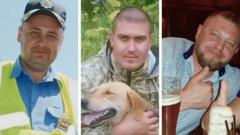
Investigation Reveals Alleged Abuses in Russian-Controlled Detention Centers
A BBC investigation has uncovered the identities of individuals allegedly involved in the abuse of detainees in Russian-controlled detention centers in Ukraine. This report shines a light on the systematic mistreatment occurring within these facilities.
Personal Accounts Illuminate Harsh Conditions
Liudmyla Huseinova, a former detainee, recalls the traumatic experiences she endured after being forcibly taken from her home in 2019. For over three years, she was held in the Izolyatsia detention center, where she describes being subjected to physical and sexual abuse. Her account includes allegations against Yurii Temerbek, a former traffic policeman turned collaborator with Russian-backed separatists. She claims he was present during her assault.
Efforts to Identify and Hold Perpetrators Accountable
The BBC's investigation, in collaboration with Ukrainian researchers, identified several individuals accused of abuses, including Temerbek and another man known as "Yermak." Survivors hope that exposing these individuals will lead to accountability. Liudmyla believes that their public identification as criminals is a form of justice.
The Broader Context of Abuse in Detention Centers
The UN's human rights office reports that the detention system in these occupied regions is rife with torture and ill-treatment. Detainees have recounted experiences of beatings, electric shocks, and sexual violence. Despite these allegations, Russia has dismissed them as unfounded.
Ukrainian authorities report over 16,000 civilians have been captured or gone missing since the conflict began. This includes incidents dating back to 2014, when Russia annexed Crimea and supported separatists in eastern Ukraine.
Life Under Occupation and the Human Toll
Prior to her detention, Liudmyla was active in supporting Ukrainian forces and civilians under occupation. She attributes her arrest to sharing a photograph of a Ukrainian flag, which may have alerted the authorities.
Inside Izolyatsia, she describes a regime of constant standing and sleep deprivation, punctuated by the sounds of other detainees’ distress. Her ordeal included being physically assaulted by a man referred to as "Koval" while Temerbek allegedly mocked her.
Ongoing Investigations and International Attention
Investigators have pieced together profiles of the accused using testimonies, social media, and official documents. Temerbek and "Yermak" (identified as Ruslan Yeriomichev) have both been implicated in crimes against detainees. Despite the accusations, they continue to live freely, some even acquiring Russian citizenship.
Liudmyla, released in a 2022 prisoner exchange, now runs an organization to support women who have experienced similar detentions. She remains haunted by her experiences and strives to help others still suffering under captivity.
Wider Implications and the Quest for Justice
The investigation also mapped the extensive network of detention centers, identifying numerous sites where detainees have been held. These centers, often unofficial, operate in secretive conditions, making international monitoring challenging.
Another survivor, Oleksii Sivak, shared his experience of torture following his arrest in Kherson. He described the brutal conditions and his narrow escape as Russian forces retreated.
Despite the lack of access for international organizations, Ukrainian prosecutors continue to document and charge individuals with war crimes. However, the path to justice remains fraught with challenges.
Efforts to contact the accused individuals for comment were unsuccessful, and the Russian Embassy in the UK reiterated Russia's commitment to international law, denying the allegations.
Source: Original Article