Trump's Iran Strategy: Balancing Threats and Negotiations
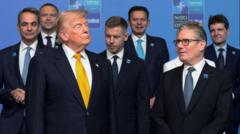
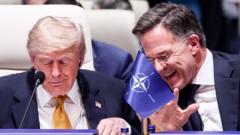
During a recent NATO summit in Turkey, President Donald Trump expressed strong sentiments regarding Iran, labeling its leaders as "scum" and accusing them of being violent. Despite his harsh language, Trump acknowledged ongoing negotiations with Iran, indicating a complex diplomatic landscape.
Escalating Tensions
Trump's rhetoric has oscillated between declarations of victory and threats of severe military action. He recently stated that the United States might launch further attacks on Iran, emphasizing America's capability to inflict significant damage. However, this approach has not succeeded in compelling Iran to abandon its core demands, such as control over the Strait of Hormuz.
The Strait of Hormuz remains a critical strategic point for Iran, as it oversees a substantial portion of the world's oil and gas transportation. For Tehran, maintaining authority over this waterway is more strategic than pursuing nuclear capabilities. Consequently, Iran is prepared to risk ongoing conflict to uphold its influence over the strait.
Diplomatic Challenges
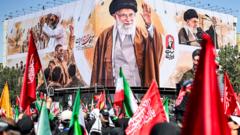
Despite the intense military exchanges and verbal confrontations, Trump has not dismissed the possibility of negotiations. The talks have been temporarily paused due to Iran's mourning period for its former supreme leader, Ayatollah Ali Khamenei, killed in a joint US-Israeli strike. Trump has commented that while he is skeptical about the outcome, his negotiators are free to continue discussions.
Negotiations are reportedly fragile, with mediators describing the environment as tense. The recent escalation in hostilities has created a challenging backdrop for diplomacy, given the deep mistrust between the US and Iran.
Iran's Determination
The Iranian regime remains resolved not to revert to pre-attack conditions. The US and Israel's inability to overthrow the regime has emboldened Iran, which continues to enjoy domestic support despite internal opposition. The regime's suppression of protests earlier in January has quelled significant public dissent for the time being.
If both sides manage to de-escalate, mediators believe a comprehensive agreement is possible. Such a deal would involve Iran allowing international nuclear inspections and accepting limitations on uranium enrichment. In exchange, the US might unfreeze Iranian assets and permit oil sales, while recognizing Iran's control over the Strait of Hormuz.
However, the path to such an agreement is fraught with obstacles. The recent surge in conflict demonstrates the difficulty of reaching a consensus that satisfies both parties.
Looking Ahead
The situation between the US and Iran remains volatile. While negotiations offer a pathway to stabilize relations, the underlying tensions and mutual distrust pose significant barriers. The outcome of continued diplomacy will depend on whether both sides can find common ground amidst their strategic and political differences.
Source: Original Article