Khamenei's Coffin Visits Sacred Shia Sites in Iraq
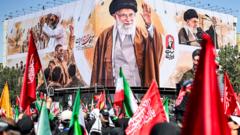
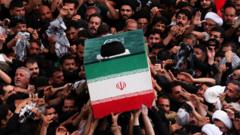
The remains of Ayatollah Ali Khamenei, Iran's late supreme leader, have been transported through two of the most revered Shia Islamic shrines in Iraq as part of extended funeral rites. These events unfolded on the fifth day of mourning, attracting enormous crowds to the city of Najaf, where the procession concluded at the mausoleum of Imam Ali, a central figure in Shia Islam.
Within the mausoleum, numerous mourners attempted to touch Khamenei's coffin while funeral prayers were conducted. The coffin was subsequently flown to Karbala, where another large procession took it to the mausoleum of Imam Hussein, another pivotal Shia figure.
Context of Khamenei's Passing
Khamenei was killed at the outset of a conflict involving Iran, the United States, and Israel. His interment is scheduled for Thursday in Mashhad, located in northeastern Iran. Among the mourners in Najaf was 30-year-old Mohammed al-Bayati, who expressed his desire to participate in the funeral of a leader he viewed as a challenger to American and Israeli power. The procession included chants against America and Israel as Khamenei's coffin traveled to Imam Ali's shrine on a lorry.
Mourners were seen crowding around the casket as it was carried through the mausoleum, with funeral prayers led by a senior Shia cleric from Najaf. The procession later moved to Karbala, approximately 60 kilometers from Najaf, concluding at the shrine of Imam Hussein, whose death in the 7th century is a key historical event in the Shia-Sunni divide.
Participation of Iranian and Iraqi Leaders
On Tuesday evening, Iranian President Masoud Pezeshkian, along with other senior officials, journeyed to Iraq to partake in Khamenei's funeral ceremonies. Their arrival was met by Iraqi Prime Minister al-Zaidi, who declared Wednesday a public holiday in honor of the occasion. Iran's new Supreme Leader, Mojtaba Khamenei, did not attend, having reportedly been injured in the same airstrike that claimed his father's life.
Reports indicate that President Pezeshkian returned to Tehran early Wednesday following retaliatory exchanges between the US and Iran. The US had accused Iran of attacking tankers in the Strait of Hormuz and had responded with military strikes on Iranian targets. Iran, in turn, targeted US facilities in Bahrain and Kuwait.
Ongoing Tensions and Diplomatic Efforts
President Donald Trump announced that the preliminary agreement between the US and Iran to cease hostilities had effectively ended. Iranian Parliamentary Speaker Mohammad Bagher Ghalibaf accused the US of violating the agreement, emphasizing Iran's resilience.
The memorandum signed by Trump and Pezeshkian aimed to reopen the Strait of Hormuz, a vital channel for global oil and gas shipments, and set a deadline for a comprehensive agreement addressing Iran's nuclear program, US sanctions, and a permanent ceasefire.
Qatar has reported positive developments in indirect US-Iran negotiations, with further talks planned following Khamenei's funeral proceedings. The discussions are part of ongoing efforts to stabilize relations and reach a lasting resolution.
Source: Original Article