Media Reforms in Hungary Target Propaganda Elimination
In Hungary, significant changes are underway in the public media landscape. The country's main public television channel has temporarily stopped airing news broadcasts, and a state-operated radio station has ceased operations entirely. The move is part of a broader effort to transform the media into more independent and credible sources of information.
End of the Orbán Era in Media
Viktor Orbán, Hungary's former prime minister, held a firm grip over state media during his 16-year tenure. However, this control came to an end following his ousting in April. The new Prime Minister, Péter Magyar, made media reform a central promise of his campaign, aiming to dismantle what he described as propaganda networks.
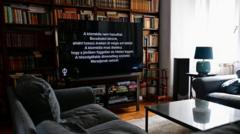
On Tuesday afternoon, both the television channel M1 and the radio station Kossuth halted their transmissions. M1's screen displayed a message: "Public media should not lie. We are sorry for doing it for so long." This was shown against a black background with white text, indicating the beginning of a transformation towards independent and trustworthy media.
Transition Plans for Public Media
During this suspension, Kossuth's usual programming, which includes news and current affairs, was replaced by classical music from Bartok Radio. According to reports, both M1 and Kossuth websites were also inaccessible on Tuesday.
The Media Service Support and Asset Management Fund (MTVA), responsible for M1, announced that the channel would resume broadcast in a new format that initially excludes news programs. News bulletins will be gradually reintroduced as a new editorial team takes charge.
Prime Minister Magyar hailed the developments as a "historic day," marking the cessation of propaganda on public media platforms. "They lied at night, they lied during the day, they lied on every wavelength. That is now over," he stated.
Political Reactions and Future Prospects
Meanwhile, Viktor Orbán criticized the reform efforts, calling them "another example of Tisza tyranny," referring to Hungary's ruling party. He urged his supporters via Facebook to tune into Hir TV, which is associated with his political faction, Fidesz.
Since assuming office, Magyar has vowed to bring about "regime change" after breaking away from Orbán's party in early 2024. He criticized the previous administration for monopolizing media outlets, which prevented him from appearing on state television since September 2024.
Following his electoral victory, Magyar appeared on both Kossuth radio and M1 to confirm his plans to halt their news coverage temporarily and establish a new broadcast authority aimed at safeguarding press freedom.
Additionally, TV2, a commercial broadcaster linked to Fidesz, has experienced significant changes. Its leading news anchors and news director have departed since Magyar's rise to power.
Source: Original Article