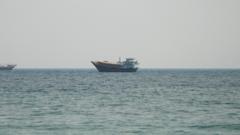
Strait of Hormuz Highlights Ongoing Tensions
The tentative agreement between the United States and Iran, signed last month, seems increasingly fragile as tensions rise over the strategic Strait of Hormuz. Despite efforts by Arab and Pakistani mediators to maintain peace, Iran's firm stance on controlling this vital maritime passage exposes a critical fault line in the deal.
The Importance of the Strait
Iran's negotiator, Mohammad Bagher Ghalibaf, emphasized Tehran's position by stating on social media, "We told you: keep your word or pay the price." This reflects Iran's interpretation of the agreement, particularly a clause that suggests Iran has significant control over maritime traffic in the strait. This interpretation conflicts with the US perspective, which views the clause as an assurance of free passage for global supplies.
Both sides have understood the memorandum of understanding differently. A key point in the 14-point plan states, "The Islamic Republic of Iran will make arrangements using its best efforts for the safe passage of commercial vessels." While Iran sees this as a green light for control, the US believes it mandates open access for oil and gas supplies and other goods.
Internal and Regional Dynamics
Within Iran, there are differing views on how to proceed. Some factions favor leveraging battlefield gains through diplomacy, while others believe more pressure should be applied to the US. Recent incidents involving Iranian attacks on vessels, including a Qatari-flagged LNG tanker, have been attributed to a "rogue unit" of the Islamic Revolutionary Guard Corps (IRGC).
The Iranian parliament introduced a bill named the Strategic Action for the Security and Sustainable Progress of the Strait of Hormuz and the Persian Gulf. Ebrahim Azizi, head of the national security commission, reaffirmed Iran's stance that control over the strait is an "inalienable right."
Regional Reactions and Diplomatic Efforts
Iran's actions have strained relations with neighboring countries, including Qatar and Oman, both of which have played mediating roles. The United Arab Emirates has expressed strong opposition to Iran's plans to charge "service fees" for transit through the strait.
Oman, caught between US and Iranian interests, has sought to maintain its role as a discreet diplomatic intermediary. Omani analyst Professor Abdullah Baabood highlighted Oman's patience in maintaining good relations with Iran, emphasizing the need for dialogue to resolve the conflict.
Prospects for Compromise
Some observers suggest a potential compromise could be reached, possibly involving no tolls for ships but allowing Iran to demonstrate its authority through other means. Former British diplomat Simon Gass, involved in previous negotiations, speculated that such arrangements could satisfy both parties to some extent.
However, fundamental misunderstandings persist. Both the US and Iran believe they hold the upper hand and expect the other to capitulate first. Iran, despite exploiting a brief window when sanctions were lifted, faces severe economic challenges, including soaring inflation and job losses exacerbated by a prolonged internet blackout.
President Trump's administration, dealing with its own pressures, may return to negotiations intermittently. The closure of the Strait of Hormuz has overshadowed discussions about Iran's nuclear program, a core issue in the ongoing dispute. The 60-day negotiation window outlined in the memorandum appears increasingly unrealistic.
Robert Malley of the International Crisis Group, who participated in the 2015 nuclear deal negotiations, expressed cautious optimism about the truce's potential to recover in some form. However, he acknowledged the dysfunctionalities on both sides, casting doubt on a sustainable resolution.
Source: Original Article