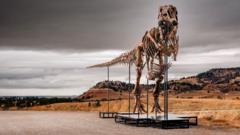
Valuation and Auction of T. Rex Fossils
In 1997, Sotheby's held a groundbreaking auction featuring a Tyrannosaurus Rex fossil named Sue, which sold for $8 million to Chicago's Field Museum. Decades later, another T. rex, known as Gus, is set to appear at auction with a valuation of $30 million, potentially becoming the most expensive dinosaur fossil ever sold. This sale has intensified discussions within the natural history community about the appropriate destination for such significant specimens.
The Growing Market for Dinosaur Fossils
The interest in dinosaur fossils has expanded beyond museums to include wealthy private collectors. As the global head of natural history at Sotheby's, Cassandra Hatton, observes, fossil hunting is a perilous endeavor that often involves considerable personal risk and investment. Fossil hunters, like those who discovered Gus in South Dakota, dedicate years to excavating and preserving these specimens.
Scientific Concerns
Despite the excitement surrounding such discoveries, there are concerns within the scientific community about the implications of private sales. Professor Susannah Maidment from the Natural History Museum in London points out that high auction prices can exclude museums from acquiring important fossils. This is problematic for researchers who rely on direct access to physical specimens to conduct studies and understand the anatomy and history of these ancient creatures.
The Role of Private Collectors
The involvement of private collectors in the fossil market has become more prominent. However, fossils held in private collections pose a challenge for scientific research. Many scientific journals do not accept studies based on privately owned specimens, limiting their availability for ongoing research. This raises concerns about the long-term accessibility and preservation of these valuable scientific resources.
Public Engagement and Education
There is also an argument for the public value of museum-held fossils. Seeing real dinosaur bones can inspire curiosity and a deeper connection to the natural world. While auctioneers like Hatton argue that high prices reflect the importance and rarity of specimens like Gus, the accessibility of these fossils to the public and scientific community remains a critical issue.
Future of Fossil Collection
While private collectors play a role in preserving fossils, the debate continues over how best to balance commercial interests with scientific and educational priorities. The fate of fossils like Gus highlights the ongoing tension between the financial and scientific worlds, as well as the importance of ensuring that significant discoveries remain accessible for future research and public engagement.
Source: Original Article