US and Iran Exchange Strikes for Second Night
The United States and Iran engaged in a second night of military strikes following President Trump's declaration that the ceasefire between the two nations is "over." The renewed hostilities have resulted in a notable reduction in the number of ships passing through the Strait of Hormuz, a crucial maritime passageway.
Military Actions and Reactions
The US military reported targeting approximately 90 military objectives in Iran, some located near the strategic Strait. In response, Iranian authorities claimed that 14 people have died over the past two days. Iran also reported explosions in coastal regions and retaliated by targeting US assets in Kuwait, Bahrain, and Qatar.
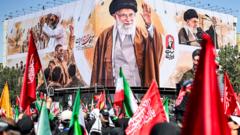
Iran's foreign ministry condemned the US strikes as a "gross war crime," alleging that civilian infrastructure such as railway bridges were targeted. The ministry's statement criticized the US administration, labeling it "evil and psychopathic." The attacks reportedly disrupted a railway line connecting Tehran to Mashhad, where the late Supreme Leader Ali Khamenei is scheduled for burial.
Gulf Region Tensions
Gulf nations experienced repercussions from the US-Iran conflict, with Bahrain's capital, Manama, experiencing explosions, Kuwait intercepting missiles and drones, and Qatar issuing a security warning. The Islamic Revolutionary Guard Corps (IRGC) confirmed retaliatory strikes on US military bases in Kuwait and Bahrain, describing these as the "first phase of the punitive response against the American treaty-breakers."
Iranian parliamentary speaker and US chief negotiator, Mohammad Bagher Ghalibaf, emphasized on social media that American aggression would not go unanswered, warning that the Strait of Hormuz would only remain open under Iranian conditions.
US Military Justification and Shipping Impact
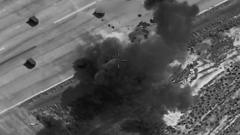
US Central Command (Centcom) justified the strikes as necessary to "degrade Iran's ability to attack commercial shipping and innocent civilian mariners" in the vital waterway. The strikes targeted air defense systems and military logistics along Iran's coast. Centcom described these actions as a continuation of successful strikes executed the previous night.
The escalation has significantly impacted maritime activity in the region. Phil Belcher, marine director at Intertanko, noted a drastic reduction in the number of ships traversing the Strait, with figures dropping from around 70 to single digits. This reduction is a stark contrast to the typical 130 ships seen before tensions escalated earlier this year.
Further Escalations and Reactions
Additional explosions were reported along the Iranian coast, affecting cities such as Konarak and Chabahar. Iranian media reported eight explosions in Bandar Abbas and missile strikes on the ports of Sirik and Jask. The island of Abu Musa, a point of territorial dispute between Iran and the UAE, also came under attack.
Iranian state media reported that air defense systems were activated in Bandar Abbas, while power outages and fires were noted in Chabahar and Bushehr. The Iranian Students' News Agency mentioned that two of the three disrupted power lines in Chabahar were quickly restored.
Political Context and International Implications
The recent exchanges mark the most severe conflict between the US and Iran since a memorandum of understanding was signed on June 17. The agreement included a 60-day ceasefire period, during which negotiations were to continue, and provisions for the safe passage of vessels through the Strait of Hormuz.
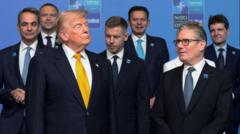
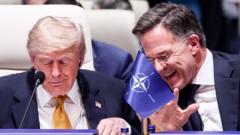
Despite the ceasefire's intended duration, President Trump expressed skepticism about further negotiations, labeling them a "waste of time." He accused Iran of not being "worthy of making a deal" and described Iranian leaders in derogatory terms.
Iran's Foreign Minister Abbas Araghchi responded by asserting that Iran would respond to insults with action, emphasizing courage and determination.
The breakdown of the ceasefire and the resumption of hostilities have raised concerns about the stability of the region and the potential for further escalation.
Source: Original Article