US Scientist Held in China on Espionage Charges
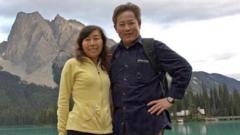
A US scientist, Chen Youlin, who specializes in detecting nuclear tests, has been held in China for nearly two years on espionage charges, according to his family. Chen, aged 54, was taken into custody in November 2024 while visiting family in Beijing, as reported by the advocacy group Global Reach. His family has recently spoken out due to a lack of progress in securing his release.
Chen's wife, Rong Yufang, also a seismologist, has criticized the allegations against her husband, insisting they are unfounded and inconsistent with the collaborative nature of his work. Chen's studies have primarily focused on North Korea, a close ally of China, which has faced international sanctions for its nuclear weapons and tests. There is no clear evidence indicating that Chen's research involved China's nuclear activities.
Espionage Allegations and International Tensions
The Chinese government has been accused by US intelligence of developing new nuclear capabilities and conducting secretive tests, claims that Beijing denies. When questioned about Chen's case, a spokesperson for China's foreign ministry stated that legal proceedings are conducted according to the law, dismissing the notion of wrongful detention. Espionage convictions in China can result in severe penalties, including life imprisonment or the death penalty.
Chen, who became a US citizen in 2011 and resides in Boston, Massachusetts, has been designated as "wrongfully detained" by the US. His wife expressed concern for his health and well-being, noting that she has had no contact with him for over 600 days. Chinese authorities have reportedly interrogated Chen over 100 times and denied him access to a lawyer for the first 13 months of his detention.
Scientific Research and Diplomatic Implications
Chen's expertise lies in utilizing seismological data to detect nuclear tests, and he has been involved in projects funded by the US government. His wife emphasized the transparency of his collaborations with Chinese colleagues, asserting that his work embodies the people-to-people engagement promoted by the Chinese government.
In December 2020, Chen participated in a study analyzing seismic data from across Asia, including China, to enhance nuclear test monitoring methods. According to Global Reach, there is suspicion within the US government that Chen's arrest may be linked to China's alleged violations of the Comprehensive Nuclear Test Ban Treaty. This treaty, which aims to prohibit nuclear test explosions, has not been ratified by several key nations, including the US and China.
In 2020, during Donald Trump's presidency, the US accused China of conducting a secret underground nuclear test at the Lop Nur facility, a claim that Beijing dismissed as baseless. The Foley Foundation, another advocacy group, highlighted concerns about Chen's health, noting his need for medical care for diabetes, high blood pressure, and high cholesterol, which is not adequately available during his detention.
Political Reactions and Wider Context
US Senator Edward Markey, representing Massachusetts, has criticized China's treatment of Chen, suggesting it could damage academic partnerships between the two nations and deter future collaborations. Senator Markey expressed hope that increased attention to Chen's situation would prompt the Chinese government to release him.
The details surrounding Chen's detention have emerged shortly after China announced the arrest of another US scholar, Min Zin, who is accused of espionage and threatening Chinese national security. These incidents have further strained US-China relations amid ongoing geopolitical tensions.
Source: Original Article