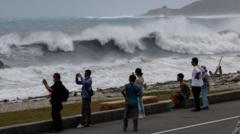
East Asia Prepares for the Impact of Typhoon Bavi
East Asia is currently preparing for the arrival of Typhoon Bavi, a massive storm that is expected to bring significant rainfall and strong winds to the region. The typhoon, which measures approximately 1,000 kilometers at its widest point, is moving across the Pacific Ocean towards Taiwan and is anticipated to make landfall in southeastern China by Saturday.
Devastation in the Philippines
In the Philippines, the storm has already had a deadly impact. Landslides caused by the severe weather have resulted in the deaths of at least 15 people on the southern island of Mindanao. Rescue efforts are ongoing as authorities continue to search for those missing. Officials have warned that moderate to heavy rains will persist across the country throughout the weekend.
Precautionary Measures and Preparations
As the typhoon approaches Taiwan, authorities have issued warnings of potential heavy rainfall, with estimates suggesting up to one meter of rain could fall. To mitigate the impact, approximately 29,000 soldiers have been placed on standby to assist with relief operations. This storm is expected to be the largest to affect Taiwan since 1987.
Agricultural workers are taking precautions by harvesting or securing their crops in anticipation of the storm, while fishermen are ensuring their boats are safely moored. Residents in flood-prone areas have been provided with sandbags to help protect their homes and businesses.
Impact on Japan and China
Japan is also on high alert, particularly in the remote Sakishima Islands, where residents are preparing by reinforcing windows and placing windproof nets over homes and shops. The typhoon has led to the cancellation of hundreds of flights, disrupting travel plans for thousands of passengers. Japan Airlines, for example, has canceled over 100 flights, impacting nearly 20,000 travelers.
In China, authorities are warning of the potential "significant impact" of Typhoon Bavi as it moves towards the southeastern Fujian province. There is concern that the storm could move northward, affecting areas less experienced in dealing with typhoons. The remnants of the storm may continue to impact regions further north, including Jiangsu and Anhui provinces.
Ongoing Recovery from Previous Storms
Parts of southern China are still recovering from the damage caused by Typhoon Maysak earlier this week. Maysak resulted in at least 39 fatalities and prompted the evacuation of over 130,000 people, primarily in the Guangxi region. The storm also inflicted significant agricultural damage and triggered rare tornadoes in central Hubei province.
The combined impact of these storms underscores the severe weather challenges faced by the region, necessitating continued vigilance and preparation.
Source: Original Article