Rotterdam's Port Under Scrutiny for Environmental Impact
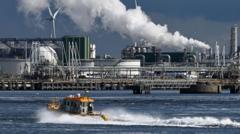
Located at the confluence of the Rhine and Meuse rivers, the Port of Rotterdam stands as Europe's largest freight hub. This strategic position, on land reclaimed from the North Sea, facilitates the movement of vast amounts of cargo, rivaling the combined capacity of all UK ports. The port's skyline is marked by towering cranes and extensive container stacks, indicative of its role as a major energy and chemical center.
Significant CO2 Contributions
Research by CE Delft highlights that the fossil fuels processed through Rotterdam are associated with approximately 600 megatonnes of CO2 emissions annually, which far exceeds the emissions of the Netherlands' Schiphol Airport. The port hosts five refineries, including Shell's largest in Europe, processing significant volumes of crude oil daily.
This situation has positioned Rotterdam as a critical case for examining whether a port entrenched in fossil fuel activities can pivot to sustainable practices.
Legal and Environmental Pressures
The environmental group Advocates for the Future has filed a lawsuit against the Port of Rotterdam Authority, demanding a definitive plan to reduce dependency on fossil fuels. According to the group, the port's industrial cluster is responsible for around 29 million tonnes of CO2 emissions annually, comparable to the emissions from numerous transatlantic flights.
Mark van Dijk, representing the Port of Rotterdam Authority, acknowledges the issue, noting that the port emits roughly half of the Netherlands' domestic emissions.
Strategies for Emission Reduction
The Port Authority has devised strategies to cut emissions from its operations and encourage greener practices among businesses. The goal is a 90% reduction in its direct and purchased energy emissions by 2030, compared to 2019 levels. Initiatives include establishing a hydrogen hub, investing in shore power for ships, and promoting alternative fuels such as LNG, biofuels, and methanol.
Efforts also involve carbon capture and storage (CCS) through the Porthos project, which aims to sequester industrial CO2 emissions in depleted gas fields.
The Call for Accelerated Action
Advocates for the Future's director, Maikel van Wissen, argues that the port should leverage its influence to accelerate the shift to cleaner technologies. He emphasizes the need for a structured plan to phase out fossil fuel reliance, warning against defaulting to short-term, cost-cutting measures.
Oscar van Veen, director of innovation at the port, notes efforts to collaborate with high-emission companies to facilitate a gradual transition away from fossil fuels.
Challenges and Global Context
Despite local efforts, many major emitters within the port are tied to corporate decisions made in the US or China, potentially relocating operations if Rotterdam's regulations tighten. Bettina Kampman of CE Delft points out that transitioning to lower emissions requires considerable infrastructure changes, constrained by existing limitations such as insufficient electricity cables.
Emeritus professor Harry Geerlings of Erasmus University Rotterdam stresses the need for a global framework to support these transitions, similar to the EU's Emissions Trading System and sulfur regulations for marine fuels, which have effectively changed industry behavior.
The Broader Geopolitical Landscape
Global politics add complexity to Rotterdam's sustainability efforts. For instance, policies under the US administration have sometimes favored fossil fuels, challenging Rotterdam's ability to retain energy-intensive industries under stricter local environmental rules.
Van Wissen insists that the port authority, as a publicly owned entity, should meet higher environmental standards, advocating for a detailed, actionable plan for a sustainable future. Van Dijk agrees that all parties aim for net-zero emissions by mid-century, though disagreements persist over the pace and scale of necessary changes.
Source: Original Article